Common Causes of a Running Toilet
The Most Frequent Culprits Behind the Problem
Understanding the root cause is the key to fixing the issue properly. In most homes throughout Cambridge and the Waterloo Region, running toilets are caused by a small number of worn or misaligned components.
- 1. Worn or Warped Flapper Valve
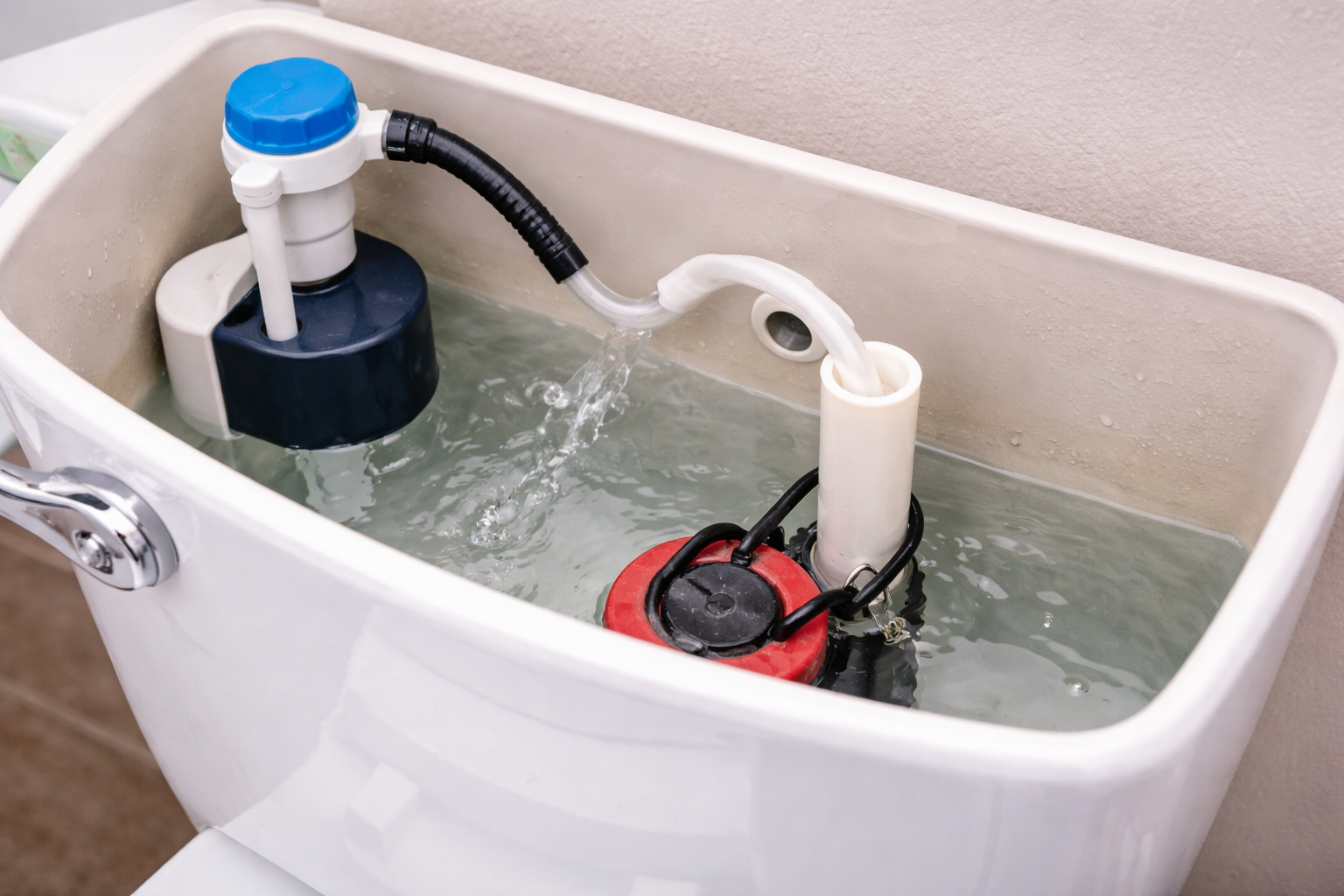
The flapper is a rubber seal at the bottom of the tank. Over time, it degrades, hardens, or warps, preventing a proper seal. Even a small gap allows water to leak continuously into the bowl.
- 2. Improper Float Height
The float controls how high the water level rises in the tank. If it’s set too high, water spills into the overflow tube, causing constant refilling.
- 3. Faulty Fill Valve
The fill valve regulates water entering the tank. If it fails to shut off properly, water continues flowing even after the tank is full.
- 4. Chain Issues
The chain connecting the handle to the flapper can be too tight, too loose, or tangled. If it prevents the flapper from sealing completely, water will continue to leak.
- 5. Cracked Overflow Tube or Tank Components
Less common, but more serious. Structural issues inside the tank can prevent proper operation entirely.
How Much Water Is a Running Toilet Wasting?
The Hidden Cost Most Homeowners Ignore
One of the biggest problems with a running toilet is that it often goes unnoticed for long periods. Unlike a burst pipe or visible leak, the damage isn’t immediate—but it adds up quickly.
A continuously running toilet can waste:
- 200 to 400 gallons of water per day
- Thousands of gallons per month
- Hundreds of dollars per year on your water bill
In areas like Cambridge and the Waterloo Region, where utility costs are steadily increasing, this is a significant and unnecessary expense.
Beyond cost, there’s also environmental impact. Wasting clean water puts additional strain on municipal systems and contributes to unnecessary resource consumption.
How to Fix a Running Toilet
Step-by-Step Solutions That Actually Work
The good news is that many running toilet issues can be resolved with simple adjustments or inexpensive part replacements.
- 1. Replace the Flapper
This is the most common fix. A new flapper is inexpensive and can immediately stop leaks if the old one is worn or warped.
- 2. Adjust the Float Level
Lowering the float ensures water stops before reaching the overflow tube.
- 3. Replace the Fill Valve
If the valve isn’t shutting off properly, replacing it restores normal operation.
- 4. Check and Adjust the Chain
Ensure there is slight slack so the flapper can fully close without obstruction.
Why DIY Fixes Don’t Always Last
While these fixes are effective, they don’t always address the underlying issue—especially in older toilets.
Problems can return if:
- Internal components are worn beyond just one part
- Mineral buildup affects moving parts
- The toilet itself is outdated or inefficient
In these cases, a more thorough repair or replacement may be necessary.
When to Call a Professional
Signs It’s Time for Expert Help
There are situations where a running toilet goes beyond a simple fix.
Call for professional
toilet repair when:
- The problem persists after replacing parts
- You notice cracks in the tank or bowl
- The toilet frequently runs despite adjustments
- Multiple components appear worn or failing
A professional can quickly diagnose whether the issue is isolated or part of a larger plumbing concern.
Preventing Running Toilet Issues
Simple Maintenance That Saves You Money
Preventative maintenance is the best way to avoid recurring problems.
- Inspect internal components annually
- Replace flappers every few years
- Avoid harsh chemical cleaners that degrade rubber parts
- Address small issues immediately before they worsen
Regular maintenance can significantly extend the life of your toilet and reduce unexpected repairs.
Why This Matters in Cambridge & Waterloo Region
Local Plumbing Considerations
Homes in this area often deal with:
- Hard water, which accelerates wear on components
- Older plumbing systems in established neighborhoods
- Increased utility costs that make inefficiencies more noticeable
These factors make it especially important to stay ahead of small plumbing issues like a running toilet.
Repair vs Replacement: What’s the Right Move?
Knowing When to Upgrade
In some cases, replacing the toilet is the smarter long-term solution.
Consider replacement if:
- The toilet is over 15–20 years old
- Repairs are becoming frequent
- Water efficiency is poor compared to modern models
Newer toilets use significantly less water and are more reliable overall.
Final Thoughts
A running toilet may seem minor, but it’s one of the most wasteful plumbing issues you can ignore. The longer it runs, the more it costs you.
The good news is that most fixes are straightforward—and when handled early, they prevent larger problems from developing.