Copper vs PEX Piping in Cambridge, ON: Which Is Better for Your Home?
If you're building, renovating, or updating your plumbing system in Cambridge, ON, one of the most important decisions you'll make is choosing between copper and PEX piping.
Both materials are approved for residential plumbing in Ontario. Both are widely used. And both can last for decades when installed correctly.
But they behave differently — especially in our Ontario climate.
At Reliant Plumbing, we install and repair both copper and PEX systems throughout Cambridge. In this guide, we’ll break down the real-world differences so you can make the right choice for your home and budget.
What Is Copper Piping?
Copper piping has been used in residential plumbing since the 1950s. It’s a rigid metal pipe joined together with soldered fittings.
If you live in an older Cambridge home, there’s a strong chance your water lines are copper.
Advantages of Copper Piping
1. Proven Longevity
Copper has an established track record. Properly installed copper pipes can last 50 years or more.
2. Heat Resistance
Copper handles high water temperatures extremely well, making it reliable for hot water lines.
3. UV Resistance
Copper does not degrade when exposed to sunlight. This makes it suitable for exposed areas.
4. Durable and Strong
Copper is rigid and resistant to physical damage compared to plastic piping.
5. Recyclable Material
Copper is environmentally friendly and fully recyclable.
Disadvantages of Copper Piping
1. Higher Cost
Copper is significantly more expensive than PEX. Material prices fluctuate based on global metal markets, which can increase project costs.
2. Labour-Intensive Installation
Installing copper requires cutting, cleaning, and soldering joints. This takes more time and increases labour costs.
3. Corrosion Over Time
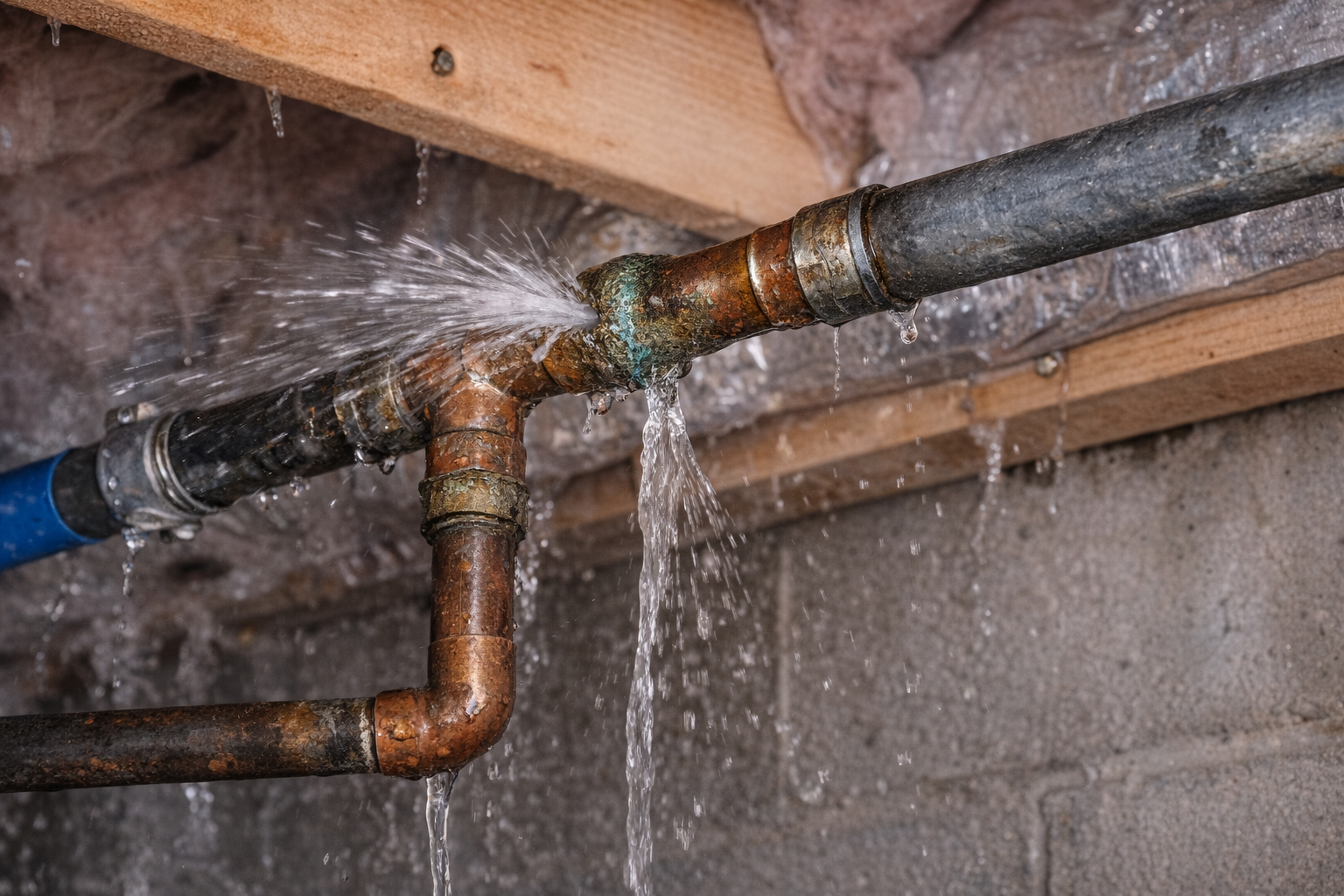
Although Cambridge water quality is generally good, mineral content and water chemistry can eventually contribute to internal corrosion or pinhole leaks.
4. Freeze Vulnerability
Copper is rigid. If water inside freezes, the pipe is more likely to split or burst. In Ontario winters, this is an important consideration.
What Is PEX Piping?
PEX (cross-linked polyethylene) is a flexible plastic tubing that became popular in North America in the 1990s. It is now the dominant material used in many new residential builds.
Instead of rigid straight sections, PEX is flexible and can curve around corners.
Advantages of PEX Piping
1. Lower Overall Cost
PEX is less expensive than copper, both in materials and installation. For full-home repiping, the savings can be significant.
2. Flexible and Freeze-Resistant
PEX can expand slightly if water freezes inside the pipe. This flexibility reduces the likelihood of bursting during cold Cambridge winters.
No pipe is completely freeze-proof — but PEX offers an advantage here.
3. Faster Installation
PEX can run in long continuous lines with fewer fittings. Fewer joints mean fewer potential leak points and faster project completion.
4. Corrosion Resistant
PEX does not corrode like metal piping. It is resistant to mineral buildup and scale.
5. Quieter Operation
PEX absorbs vibration better than rigid copper, reducing water hammer noise in many homes.
Disadvantages of PEX Piping
1. UV Sensitivity
PEX cannot be exposed to direct sunlight for extended periods. It must be installed inside walls or protected from UV exposure.
2. Rodent Damage (Rare but Possible)
In some cases, rodents can chew through PEX piping. While uncommon, it is a consideration in certain environments.
3. Newer Material
PEX has been widely used for decades now, but it does not have the 70+ year track record of copper.
Copper vs PEX Cost in Cambridge, ON
While every home is different, here’s a general comparison:
- Copper: Higher material cost + higher labour cost
- PEX: Lower material cost + lower labour cost
For large renovation projects or full-home repipes, PEX can save homeowners thousands of dollars.
For small sections of exposed piping — such as near a water heater — some homeowners still prefer copper for appearance and durability.
The best option often depends on the size of the job and your long-term plans.
Which Is Better for Ontario Winters?
Cambridge, ON experiences freezing temperatures every year. Frozen pipes are a real concern for homeowners.
Because PEX can expand slightly, it is generally less likely to burst if freezing occurs. Copper, being rigid, has a higher risk of splitting under pressure.
However, pipe material is only part of the equation. Proper insulation, correct installation, and accessible shutoff valves are equally important in preventing winter damage.
Does PEX Affect Water Quality?
Many homeowners ask whether PEX changes the taste of water.
Modern PEX systems approved for use in Ontario are safe for potable water. Once flushed properly after installation, most homeowners notice no taste difference.
Copper piping can sometimes contribute to metallic taste if corrosion begins internally — especially in aging systems.
Both materials are considered safe when installed correctly.
When Copper Might Be the Better Choice
Copper may be a strong option if:
- Pipes will be visible or exposed
- Installation is near high-heat appliances
- The homeowner prefers traditional materials
- The project is small and cost difference is minimal
Copper remains a premium, durable option.
When PEX Is Often the Better Choice
PEX is commonly recommended for:
- Full home repiping
- Basement renovations
- Bathroom remodels
- Budget-conscious upgrades
- Homes with higher freeze risk
- Projects requiring faster installation
For many modern residential homes in Cambridge, PEX offers excellent performance and long-term value.
Can Copper and PEX Be Used Together?
Yes.
Many homes have both materials. During renovations, plumbers often transition from copper to PEX using approved fittings.
When installed properly, mixed systems function safely and efficiently.
Signs You May Need to Replace Old Piping
If your Cambridge home has aging copper piping, watch for:
- Green staining around fittings
- Frequent pinhole leaks
- Reduced water pressure
- Discoloured water
- Visible corrosion
For PEX systems, look for:
- Leaks at fittings
- Improper installation
- Physical damage
Early inspection can prevent major water damage.
Final Verdict: Copper or PEX?
There is no one-size-fits-all answer.
Copper is durable, time-tested, and strong — but more expensive.
PEX is flexible, cost-effective, and better suited to freeze conditions — making it a popular choice for many Ontario homeowners.
The right decision depends on your home, budget, and long-term goals.
Need Help Deciding in Cambridge, ON?
If you're renovating, building, or dealing with aging pipes, professional guidance makes a difference.
At Reliant Plumbing, we provide honest recommendations and high-quality installation tailored to Ontario conditions.
Whether you choose copper or PEX, the key is proper installation and long-term reliability.
Call Reliant Plumbing at 519-778-3828 to schedule an inspection or discuss your plumbing upgrade options in Cambridge, ON.